
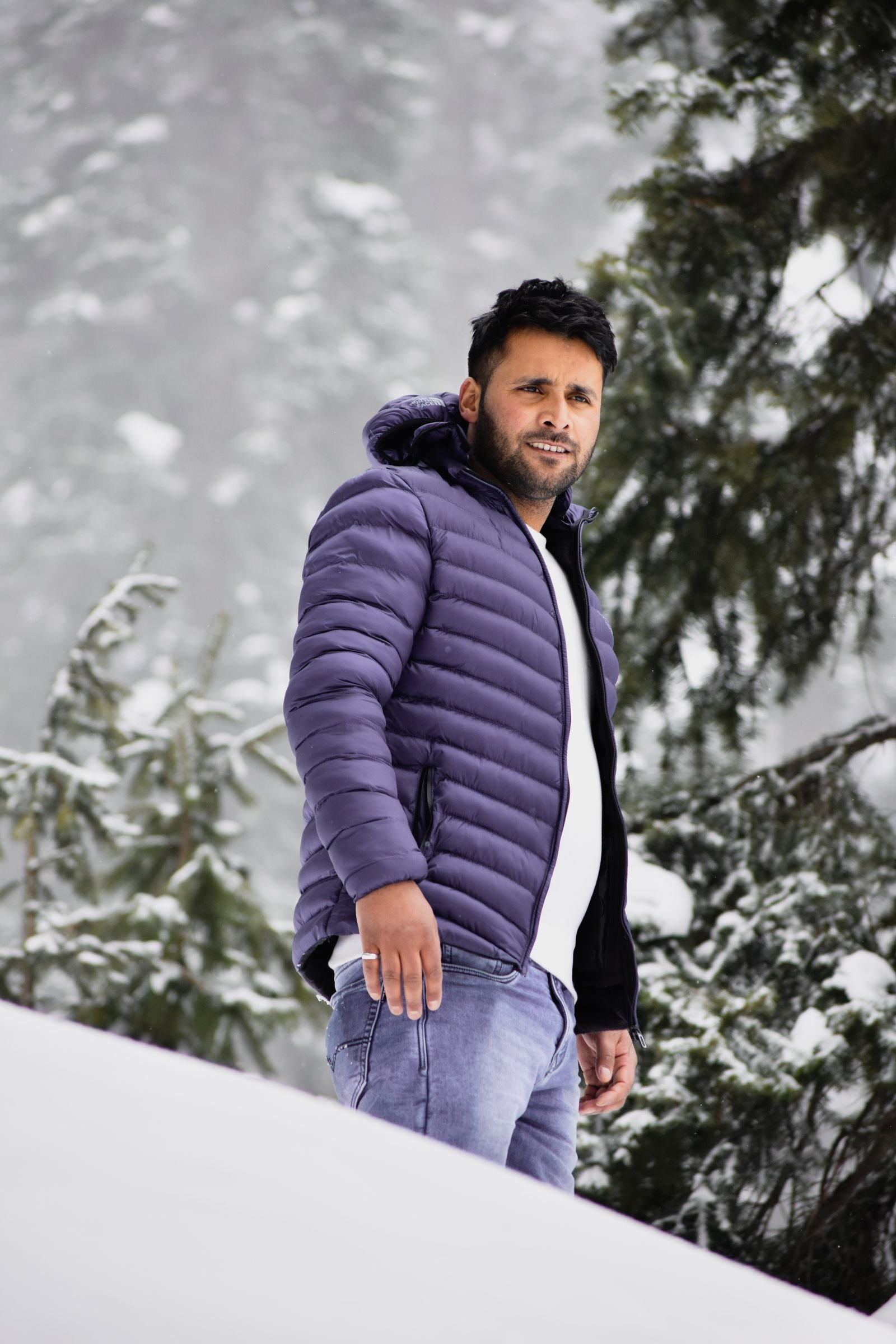
Buying men’s winter clothes is about choosing the right pieces, not chasing the latest look. A good winter wardrobe keeps you warm and works with what you already own: a solid coat, warm knitwear, the right trousers and sturdy boots.
This guide covers coats, knitwear, shirts, base layers, trousers, boots and the fabrics that keep you warm, plus how to layer without looking bulky and what to buy first.
The Winter Coat: Start Here
Your coat is the single most important piece of men’s winter clothing. It does the most work against the cold, and a good one can last a decade. If you buy only one winter item this year, make it a coat.
Wool Overcoats
A wool overcoat is the classic choice for cold weather. It looks smart enough for work, yet works just as well over jeans on the weekend. Look for at least 70 percent wool — pure wool or a wool and cashmere blend is warmer and holds its shape better than a mostly synthetic coat. A knee-length coat in navy, charcoal or camel goes with everything. Check the fit: it should close over a jumper without pulling.
Parkas and Puffer Jackets
For the coldest days, nothing beats a parka or a puffer jacket. A parka is longer, often hooded, and best when the temperature drops below freezing. A puffer jacket is shorter, lighter and easier to move in, better for driving and commuting. Check the filling: down is warmest and lightest, while synthetic filling is cheaper and dries faster when wet. Look for a water-resistant shell and a hood that fits over a beanie.
Knitwear: Jumpers, Cardigans and Roll-Necks
Knitwear is the heart of men’s winter clothing. A good jumper is warm, comfortable and endlessly useful, and three or four pieces will carry you through the season.
Choosing Knitwear Fabrics
Fabric decides how warm and comfortable a jumper feels. Merino wool is the best all-round choice: soft, light, breathable and not itchy. Lambswool is thicker and warmer, good for weekend jumpers. Cashmere is softest and warmest, but it costs more and needs gentle care, so save it for special pieces. Avoid jumpers made entirely from cheap acrylic — they pill, lose their shape and are far less warm than wool.
The Essential Knitwear Pieces
Start with a crew-neck jumper in a neutral colour such as navy, charcoal or cream. It works under a coat, over a shirt, or on its own with jeans. Add a roll-neck for the coldest days: it keeps your neck warm without a scarf. A cardigan is the easiest knitwear to layer — wear it open indoors, buttoned up under your coat outside.
Shirts and Base Layers
What you wear under your jumper matters too. The right base layers add real warmth without bulk, and the right winter shirt makes the outfit look finished.
Base Layers That Actually Work
A thermal base layer is the cheapest way to stay warm in winter. Wear a thin thermal top under your shirt on cold days. Merino wool base layers are the best: warm, light and comfortable, and they stay fresh all day. Synthetic thermal tops are cheaper and dry quickly, good for outdoor activity. Keep them close-fitting and thin, and buy two or three so you always have a clean one ready.
Winter Shirts
Flannel shirts are a winter staple: soft, warm and casual, a checked flannel shirt with jeans and boots is a classic outfit. For smarter days, an Oxford cloth shirt is thicker and warmer than a standard cotton shirt and looks right under a jumper. Choose slightly heavier fabrics and darker colours in winter — deep blues, burgundy and dark green.
Trousers for Cold Weather
Thin summer trousers will not keep you warm in winter. Winter trousers need thicker fabrics and a cut that sits well over boots. Dark denim jeans are the easiest winter trouser to own: a straight or slim fit in a dark wash works with almost every coat and jumper you own. For a smarter look, wool trousers are warmer than cotton and hold a crease. Flannel-lined chinos are another practical option, with a soft lining that adds real warmth. Winter trousers should just touch the top of your boots without pooling around the ankle.
Boots and Winter Footwear
Cold, wet feet ruin a winter day, so good boots are essential. Winter footwear should be warm, waterproof and grippy, and still look good with the rest of your outfit.
Choosing Winter Boots
Chelsea boots are the most versatile choice for most men. They pull on easily and work with jeans, chinos and wool trousers. Choose dark brown or black leather with a sturdy rubber sole, and they will handle rain, slush and cold pavements without fuss. For heavier snow, lace-up leather boots with a thick, treaded sole give more grip. Leave room for thick socks — a boot that fits snugly with thin socks will feel tight and cold with winter socks on. Brush off mud and salt, let them dry naturally away from direct heat, and apply waterproofing wax every few weeks.
Fabrics That Keep You Warm
Wool is the best all-round winter fabric: warm, breathable, naturally water-resistant and durable. Down is unbeatable for jackets because it traps heat while staying light, though it loses warmth when wet. Fleece is a cheap, light middle layer for under a coat. Cotton is poor on its own: it absorbs moisture, dries slowly and feels cold when wet. Read the label — a high wool content will almost always outperform a cheaper synthetic lookalike.
How to Layer Without Looking Bulky
Layering is the key to staying warm. The rule: thin layers close to the body, one chunky piece at a time, and looser layers on top. Start with a thermal base layer, add a shirt or a fine jumper, then a thicker jumper, and finish with your coat. Air trapped between the layers keeps you warm, and you can remove one indoors. Keep colours close together — shades of navy, grey and brown always look polished. Avoid two bulky items at once: one statement piece is enough.
What to Buy First: A Winter Wardrobe Checklist
If you are building a winter wardrobe from scratch, buy in this order: one good coat, two jumpers, one pair of boots, a thermal base layer, dark jeans, and a scarf, hat and gloves. These pieces mix and match into dozens of outfits. Buy neutral colours first — navy, charcoal, black, camel and grey — then add a brighter piece or two. Shop at the end of the season for the best prices, and choose quality over quantity: a good wool coat bought on sale will outlast three cheap coats.
Frequently Asked Questions
What are the most essential men’s winter clothes?
A good coat, two warm jumpers, sturdy boots, a thermal base layer and dark jeans are the essentials. These pieces mix and match for work and weekends. Add a scarf, hat and gloves, and your wardrobe is complete.
How many layers should a man wear in winter?
Three layers are usually enough: a thin base layer, a warm jumper, and a windproof coat. On very cold days, add a shirt between the base layer and the jumper.
Which coat is warmest for men in winter?
A down-filled parka is the warmest practical choice for very cold weather, as down traps heat while staying light. A heavy wool overcoat is also very warm and looks smarter, so it suits work better.
How should men’s winter clothes fit?
Winter clothes should fit over your layers without pulling. Try coats on with your thickest jumper, and boots on with thick winter socks. Avoid anything skin-tight — a little room traps warm air — but do not go oversized, since excess fabric lets the cold in.
Conclusion
Men’s winter clothes are about choosing the right pieces, not the most pieces. A good wool coat, warm knitwear in the right fabrics, sturdy boots and a few smart layers will keep you warm all season and look good doing it. Start with the essentials, buy neutral colours first, and spend more on quality fabrics.
For more fashion guides and seasonal style ideas, or if you have a question about this article, please contact us.