In a world of smartphones, social media and constant noise, the Amish lifestyle stands out for its simplicity. The Amish are a Christian community, mostly living in rural parts of the United States — especially Pennsylvania, Ohio and Indiana — who choose to live simply, work hard, and put faith and family before modern convenience.
Amish communities do change, slowly and carefully, and different groups have different rules. But the core has stayed the same for generations: a life built around God, family, community and honest work, with as little dependence on modern technology as possible.
Who Are the Amish?
The Amish trace their roots to Anabaptist Christians in Europe in the 1500s and 1600s, and to the Swiss leader Jakob Ammann, whose followers became known as the Amish in the late 1600s. Many Amish families emigrated to North America in the 1700s and 1800s, settling in Pennsylvania, where the largest Amish community — Lancaster County — still lives today.
There are now hundreds of thousands of Amish people in North America, living in hundreds of separate communities. Each community, or church district, sets its own rules, known as the Ordnung, which guide daily life: what technology is allowed, how people dress, and how the community is run. Because of this, Amish life can look quite different from one place to another.
Faith at the Centre
Faith is the foundation of the Amish lifestyle. Amish families worship together in each other’s homes, taking turns to host the Sunday service, rather than meeting in a church building. Services are held in German and can last for several hours.
The Amish believe in living simply and humbly, following the teachings of the Bible in everyday life. Pride, showing off and seeking attention are discouraged, which is one reason Amish clothing is plain and homes are modest. The aim is a life that honours God through hard work, honesty and care for others, rather than through wealth or status.
Family and Community
Family is at the heart of Amish life. Families are often large, with several children, and several generations may live close together or on the same farm. Children are raised to help with household and farm work from a young age, and the family eats, works and worships together.
Community matters just as much. Amish neighbours help each other in practical ways — raising a barn together, harvesting a neighbour’s crops when someone is ill, or supporting a family after an accident. This mutual help, known as mutual aid, means the community looks after its own rather than relying on insurance or government support. When a barn needs building, the whole community turns up, and the work that would take weeks alone is done in a day.
Work: Farming, Crafts and Small Business
Traditionally, most Amish men farmed, and many still do. Amish farms are usually worked with horses rather than tractors, and the work is done by hand or with horse-drawn equipment. Crops, dairy cows and vegetable gardens provide food for the family and produce to sell at local markets.
Today, many Amish families also run small businesses: woodworking and furniture making, quilting, baking, construction, and market stalls selling fresh produce, jams and handmade goods. Amish furniture is well known for its quality and craftsmanship, and many people travel to Amish country to buy it. These businesses let families earn a living while staying within their community and keeping their way of life.
Work is valued not just as a way to earn money, but as a way to serve the family and the community. Children learn a trade by working alongside their parents, and the skills of farming, carpentry and sewing are passed down through generations.
Simple Living and Limited Technology
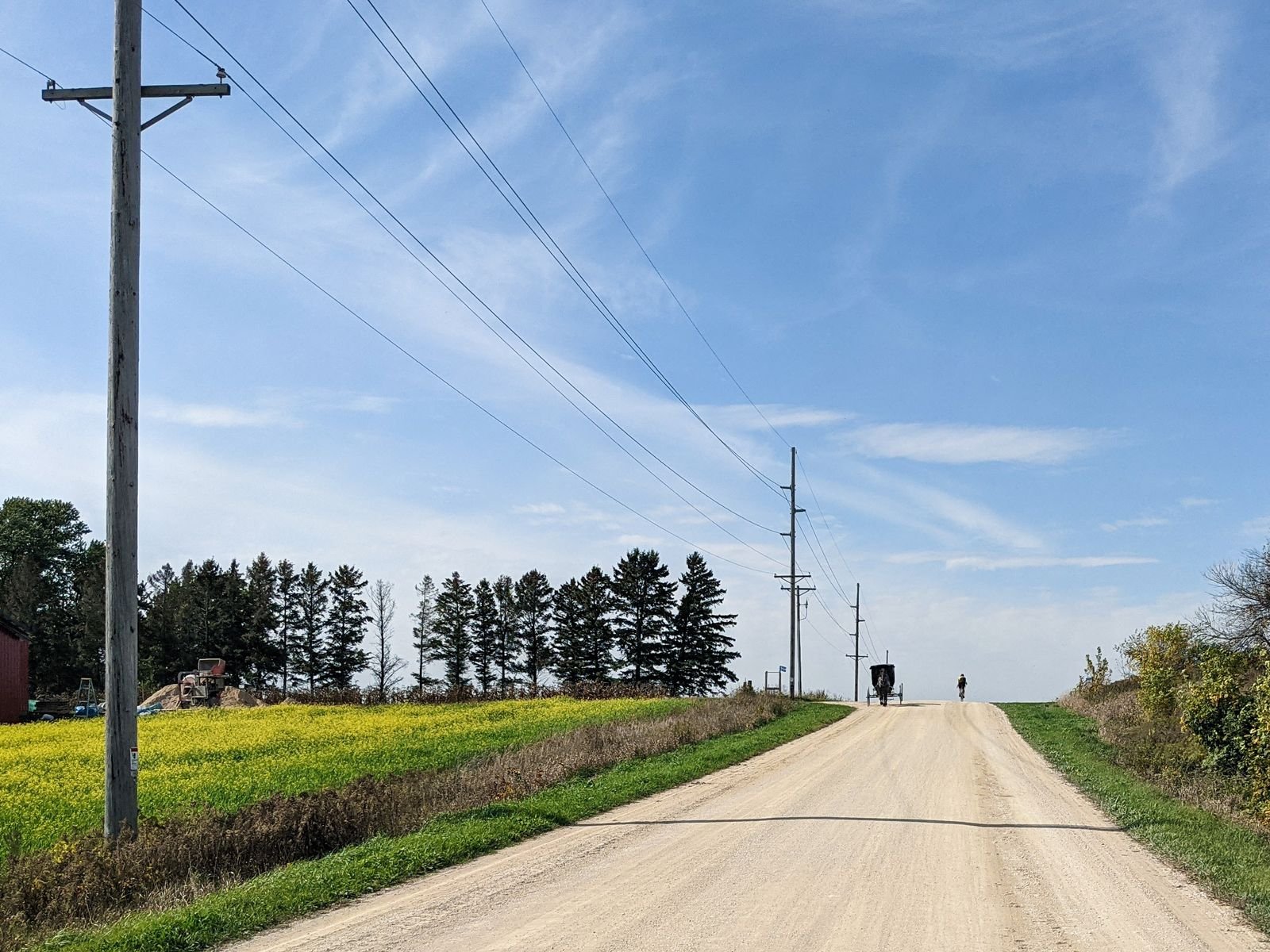
The most famous part of the Amish lifestyle is the limited use of modern technology. Most Amish families do not have electricity from the public grid in their homes, do not own cars, and do not use televisions or the internet. Instead, they travel by horse and buggy, light their homes with gas lamps, and heat them with wood stoves.
This is not because the Amish fear technology itself. Their concern is that technology can pull families apart and bring the outside world into the home in ways that weaken community life. Each community decides together which technologies are acceptable and which are not. Some allow a telephone in a small building outside the house for business calls. Some allow solar panels or a diesel generator for a workshop, but not for the home. The rules are a community decision, made slowly and carefully, rather than a personal choice.
Dress is also simple and plain. Men wear dark trousers, plain shirts, suspenders and wide-brimmed hats. Women wear long dresses in solid colours, aprons and head coverings. The plain dress is a sign of humility and belonging, and it also means nobody is judged by what they wear.
Education and Growing Up
Amish children usually attend small, one-room schools run by the community, with one teacher and children of several ages learning together. Formal schooling generally ends at around fourteen, after which young people learn a trade or work on the family farm.
When Amish teenagers reach sixteen, they enter a period called Rumspringa, meaning “running around”, when they are allowed more freedom to experience the outside world before deciding whether to join the church as adults. Most choose to be baptised and remain in the community — a sign of how strong family and community ties are.
Visiting Amish Country
Amish country is a popular place to visit, and most Amish communities welcome respectful visitors. If you go, remember that you are visiting people’s homes and farms, not a theme park. Do not take photographs of Amish people without permission — many believe photographs go against their faith — and do not walk onto private land or into barns uninvited.
The best way to experience Amish country is to visit a farmers’ market, eat at a family-style restaurant, or buy handmade goods from a shop. You will see a way of life that is quieter, slower and more connected than most of us are used to.
Frequently Asked Questions
Do Amish people use any modern technology at all?
It depends on the community. Most do not have grid electricity, cars, televisions or the internet in their homes, but some allow limited technology for work, such as a telephone in an outbuilding, solar power for a workshop, or a gas-powered refrigerator. Each community decides its own rules together.
Why do Amish people travel by horse and buggy?
Travelling by horse and buggy keeps life local and slow. It means families stay close to home and to each other, rather than travelling far for work or leisure. It is also a visible sign of their commitment to a simple life, separate from the wider world.
Do Amish children go to school?
Yes, Amish children attend small community schools, usually one-room schoolhouses, until around the age of fourteen. After that, they learn practical skills by working with their families, rather than continuing in formal education.
Can outsiders visit Amish communities?
Yes, Amish country welcomes visitors, especially in places like Lancaster County, Pennsylvania, and Holmes County, Ohio. Be respectful: do not photograph people without permission, do not enter private property, and remember that you are visiting real homes and farms, not an attraction.
Conclusion
The Amish lifestyle is a deliberate choice to live simply, work hard, and put faith, family and community first. It is built on farming and craftsmanship, plain dress, limited technology, and the belief that a good life is a simple one. Different Amish communities live by different rules, but the core values are the same everywhere: humility, honesty, hard work and care for each other. Whether or not you share their faith, there is something to admire in a way of life that has stayed steady for generations — and something to learn from it about slowing down and focusing on what matters. If the slower pace appeals to you, our guides to healthy lifestyle habits and what mindfulness is take the same ideas into everyday life, and our lifestyle photography guide shows how to capture simple moments like these.
Have a lifestyle question or a topic you would like us to cover? Get in touch through our contact page — we would love to hear from you.